
Two simple conclusions can both be wrong
A V-0 result is useful, but it is not a declaration that a finished appliance, vehicle component or building product is safe in every ignition scenario. The result belongs to a specimen geometry, thickness, orientation, conditioning procedure and test method. Change the wall thickness, pigment, glass-fibre level, recycled content, moulding history or weld-line position and the burning response may change. The final product may also be governed by a component, appliance, vehicle or construction standard that asks a different question from UL 94.
“Halogen-free” is equally limited. It may satisfy a customer specification and may avoid particular halogenated chemistries, but it does not automatically mean low smoke, low toxicity, low migration, easy recycling or a smaller carbon footprint. A replacement system may need more additive, raise density, narrow the processing window or shorten service life. The engineering objective is therefore not to choose between fire safety and environmental compliance. It is to find a formulation window that controls both, while retaining the properties needed for manufacturing and use.
Define four risks before comparing additives
Fire risk covers ignition, flame spread, heat release, burning droplets, smoke, toxic effluent and the possibility that fire reaches adjacent parts. Chemical and toxicological risk concerns the identity, concentration, impurities, migration, persistence, bioaccumulation, exposure route and legal status of substances across the supply chain. Mechanical and processing risk includes lost impact strength, stiffness or elongation; unstable melt flow; plate-out; corrosion; hydrolysis; colour shift; moisture sensitivity; and a narrow compounding or moulding window. End-of-life risk concerns whether additives obstruct sorting, contaminate recycled streams, persist through multiple heat histories or force material into disposal routes rather than useful recycling.
These risks are coupled. A highly efficient system may reach a target at lower loading and preserve flow, yet contain a substance restricted in the destination market. A mineral system may avoid that substance but require a loading high enough to reduce toughness or increase part weight. A reactive or polymeric additive may reduce migration, but its impurities, degradation products and recycling behaviour still require evidence. Optimising only one headline metric transfers risk rather than removing it.
- Fact: fire classifications and chemical restrictions answer different questions.
- Engineering judgement: the lowest-risk route depends on the resin, thickness, fire scenario, market, service conditions and end-of-life path.
- Evidence gap: an SDS or supplier statement alone rarely proves final-part fire performance or full-market compliance.
What flame tests prove—and what they do not
The UL Solutions description of UL 94 distinguishes HB, V-2, V-1, V-0, 5VB and 5VA tests. HB uses a horizontal specimen and evaluates burning rate. V classifications use vertical specimens and consider afterflame, afterglow and whether flaming droplets ignite a cotton indicator; V-2 permits that ignition while V-1 and V-0 do not. The 5V exposure is substantially more severe, and 5VA and 5VB also differ in whether a hole forms in a plaque. A ranking without the tested thickness is incomplete, and a VTM rating for thin material is not interchangeable with the similarly numbered V rating.
Glow-wire methods simulate a heated electrical source rather than a free flame. IEC 60695-2-11 is an end-product glow-wire method, while related material tests support preselection. Oxygen index under the ISO 4589 series identifies the oxygen concentration that just sustains burning under defined conditions. A cone calorimeter measures quantities such as time to ignition, heat-release rate, total heat release and mass loss under imposed radiant flux. These methods provide complementary evidence; none should be substituted for another simply because the result looks favourable.
Smoke density and smoke-gas toxicity need their own methods and acceptance criteria. A UL 94 classification does not by itself quantify either. Likewise, a material-level rating does not account for enclosure openings, joints, nearby ignition sources, ventilation, electrical fault energy, assembly geometry or flame propagation between components. Test virgin, heat-aged, hydrothermally aged and recycled formulations when those states are credible in service. Then test the real wall thickness and representative part, followed by the product-level programme required by the applicable standard or certification body.
Environmental compliance is not one label
Halogen-free, RoHS compliant, REACH compliant, SVHC-free, POPs compliant, low smoke, low toxicity, recyclable, bio-based and lower carbon footprint are not synonyms. “Halogen-free” needs a named specification, elements covered, limits and analytical method. RoHS concerns listed substances in covered electrical and electronic equipment. REACH creates several distinct duties; Candidate List status, Annex XIV authorisation and Annex XVII restriction are separate regulatory mechanisms. “SVHC-free” needs a concentration basis, date and scope. POPs rules can prohibit or tightly limit specific persistent substances in substances, mixtures, articles and waste. Smoke, toxicity, recyclability and carbon footprint each require different evidence.
Ask for evidence that matches the claim: a current composition declaration and CAS identities; a bill-of-material risk assessment; accredited or otherwise suitable analytical reports with sampling and detection limits; a dated REACH/SVHC statement; relevant RoHS results for homogeneous materials; POP screening where recycled feedstock or legacy additives create risk; and fire, mechanical, electrical and ageing data from the actual formulation. A supplier’s generic product-page statement cannot replace batch-specific documents or final-article evaluation.
EU and China: regulate the substance, product and use—not a slogan
The EU RoHS overview lists ten restricted substances for covered electrical and electronic equipment, including PBB and PBDE. Annex II generally sets 0.1% by weight in homogeneous material for PBB and PBDE, subject to scope and exemptions. That is not a ban on every brominated flame retardant. Under REACH, Candidate List inclusion triggers communication and other duties; an Annex XIV listing concerns authorisation for covered uses, while Annex XVII contains restrictions. ECHA’s 2023 flame-retardant strategy identifies groups, including aromatic brominated flame retardants, for further regulatory work; a regulatory strategy is not itself a blanket legal prohibition.
The EU POPs Regulation separately controls named persistent pollutants. Its current consolidated text contains substance-specific entries and changing limits, including special provisions for recovered materials. Delegated Regulation (EU) 2025/1930 added Dechlorane Plus with a 1,000 mg/kg unintentional-trace limit until 15 April 2028 and 1 mg/kg thereafter, alongside time-limited and spare-part exemptions. HBCDD and PBDE entries have their own limits and derogations. Procurement teams must therefore check the exact substance, article or mixture, recovered-material status, date, intended use and exemption instead of relying on a generic “EU compliant” label.
China’s Administrative Measures for hazardous substances in electrical and electronic products have applied since 1 July 2016. The mandatory GB 26572-2025 was published on 1 August 2025 but is officially marked “about to be implemented” and takes effect on 1 August 2027; it must not be described as already fully effective. Separately, the 2023 List of New Pollutants for Priority Management and related notices control specific POP-type flame retardants. China states that production, processing/use and import/export of decaBDE, short-chain chlorinated paraffins and Dechlorane Plus were phased out subject to the stated scope and expired exemptions; HBCDD production, use and import/export have been prohibited since 26 December 2021. Product-specific rules for electronics, vehicles, buildings and children’s products still need separate review.
Halogenated systems: efficiency is real, and so are substance-specific risks
Some halogenated systems are efficient in the gas phase and can achieve useful flame performance at comparatively low loading, often with a synergist. Lower loading can help preserve flow, density, impact strength and part geometry. That is a genuine engineering advantage and is why it is wrong to describe every halogenated flame retardant as illegal or uniformly toxic. Chemical identity matters: polymeric and small-molecule products, reactive and additive products, brominated and chlorinated products, impurities and degradation profiles are not interchangeable.
The compliance concern is equally real for particular substances. Persistence, bioaccumulation, toxicology, smoke and corrosive gas, migration, recycling contamination and future group restrictions can affect the risk case. Screening only for total bromine cannot identify which molecule is present, while an SDS may omit low-level constituents that remain relevant to a legal limit. For virgin resin, require identity and impurity control. For recovered resin, use a risk-based analytical plan that can separate an elemental screening signal from confirmatory substance analysis.
Phosphorus, nitrogen and intumescent systems: useful, not automatically benign
Phosphorus-based products can act in the condensed phase by promoting char, in the gas phase, or through both routes. Phosphorus–nitrogen combinations and intumescent systems can be effective in PP, PA, PBT and other polymers when chemistry, dispersion and processing are matched. Intumescence forms a carbonaceous, insulating layer that can reduce heat and mass transfer. These routes are often selected for halogen-free specifications, but the family name does not predict toxicology, smoke, hydrolytic stability or regulatory status.
Common failure modes include excessive moisture uptake, hydrolysis, acid generation, mould corrosion, plate-out, blooming, poor colour, reduced electrical performance and a narrow thermal window. Intumescent PP systems may require high loading, which can reduce impact strength, elongation, gloss and thin-wall flow. Glass fibre, pigments, fillers and stabilisers can change char formation. PA and PBT compounds need particular attention to drying, residence time and hydrothermal ageing. A successful initial burn test is not enough if the rating or mechanics drift after conditioning.
Mineral, polymeric, reactive and low-migration routes
Aluminium hydroxide, magnesium hydroxide and related mineral routes absorb heat and release water while diluting combustible gases. They can offer low smoke and avoid certain organic flame-retardant chemistries, but effective loadings can be high. The consequences may include higher density, lower melt flow, reduced elongation and impact, poorer surface appearance and more demanding compounding. Surface treatment, particle size, dispersion and the polymer’s processing temperature are decisive.
Polymeric or reactive flame retardants can reduce migration or provide longer-term retention compared with a compatible small molecule. That can improve service-life stability and reduce blooming, but “polymeric” does not prove low hazard, easy recycling or low carbon impact. Residual monomers, catalysts, impurities, reaction completeness and breakdown products still matter. Reactive incorporation can also make end-of-life separation or chemical recycling more complex. The correct comparison uses measured migration, ageing, fire performance and composition—not a structural marketing label.
The most dangerous replacement is a regrettable substitution
A regrettable substitution replaces a controlled substance with another that has similar persistence, mobility, exposure or toxicological concerns, or whose hazards are insufficiently characterised. The risk is not hypothetical: peer-reviewed work has asked whether some organophosphate ester replacements for PBDEs amount to regrettable substitution. That does not justify treating all organophosphorus chemistry as one hazard class. It does justify comparing functional alternatives using hazard, exposure, fire effectiveness and life-cycle evidence rather than checking only whether the replacement is absent from today’s restricted list.
Other regrettable routes are more mechanical than toxicological: increasing additive loading until the part becomes brittle; meeting a halogen-free purchasing rule while reducing product life; choosing a hygroscopic system that loses electrical reliability; accepting a supplier declaration without confirming impurities; or recycling legacy flame-retarded plastics into a product category with tighter limits. A future-facing review should include plausible group regulation, available analytical methods, supplier change control and the cost of redesign—not only current-list compliance.
Recycled plastics are the stress test for flame-retardant systems
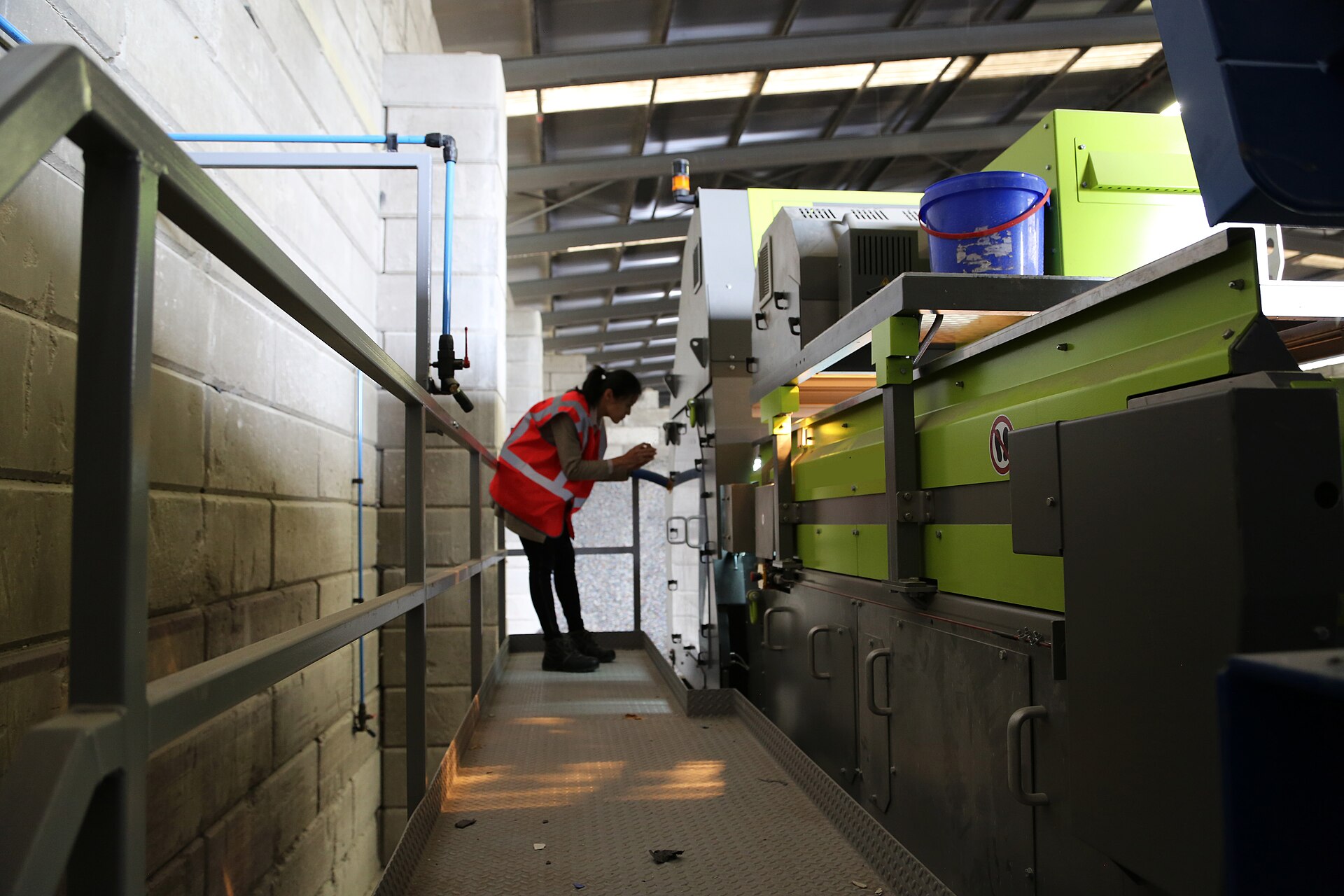
Recycled feedstock can carry historical additives from products made under older rules. Mixed streams introduce uncertain polymer ratios, pigments, metals, fillers and flame retardants; repeated processing changes molecular weight and stabiliser reserve. Reviews of legacy additives in circular plastics describe the conflict between retaining polymer resources and removing hazardous chemistry. The LitChemPlast review documents how brominated flame retardants and other legacy chemicals can cross into recycled products. Black and complex waste streams are especially difficult because optical sorting can be limited and an elemental bromine signal does not identify the compound.
A Plastic Compatibilizer may improve interfacial adhesion in a diagnosed mixed-polymer blend; a Plastic Heat Stabilizer may help restore processing or ageing stability; and a Melt Flow Index Modifier may support controlled flow adjustment. None can make contaminated feedstock legally compliant. Establish feedstock specifications, screen risk substances, compare virgin and recycled baselines, then measure fire rating, heat release, impact, tensile, flow, electrical performance and ageing over realistic reprocessing cycles.
A practical selection workflow
Start with the sales country and exact product category, then list legal requirements separately from customer specifications and voluntary labels. Define the credible ignition source, fire growth concern and applicable material, component and product tests. Freeze the baseline resin, grade, reinforcement, pigment, filler, recycled content, wall thickness and process. Obtain substance identities, CAS numbers where meaningful, impurity information, current regulatory statements and change-control commitments. Do not select a chemistry before those boundaries are visible.
Build at least three dosage levels around a technically plausible starting point. Test flame behaviour together with impact, tensile or flexural response, melt flow, electrical properties, moisture uptake, colour, surface and dimensional stability. Apply the ageing relevant to the part—heat, humidity, UV, fuel, cleaning media or repeated reprocessing—then retest. Confirm the final thickness and representative component. Lock the selected supplier, grade, formulation and batch records, and schedule regulatory review rather than treating one report as permanent compliance.
- 1. Confirm country, product category and customer specification.
- 2. Define fire scenario, test method, orientation, conditioning and thickness.
- 3. Fix resin, reinforcement, pigment, filler and recycled-content ranges.
- 4. Screen substance identity, CAS information, impurities and regulatory status.
- 5. Compare multiple dosages across fire, mechanical, flow, electrical, moisture and appearance tests.
- 6. Repeat after relevant ageing and on representative parts.
- 7. Maintain batch traceability, supplier change control and periodic legal review.
Flame-retardant formulation trade-off matrix
| Item | Target | Common misreading | Test or document needed | Possible performance cost |
|---|---|---|---|---|
| Flame rating | Defined classification at actual thickness | V-0 means the product is fire-safe | Test report with grade, colour, thickness and conditioning; final-product test | Loading, toughness, flow or colour |
| Smoke | Acceptable density and composition for the use | Halogen-free means low smoke and low toxicity | Application-specific smoke and effluent testing | Char, cost or other emissions |
| Chemical restriction | Comply in each market and product scope | A generic SDS or “REACH compliant” claim is enough | Identity, declaration, analytical report, exemption and date review | Reformulation and supplier constraints |
| Impact strength | Retain ductility after conditioning | Initial unnotched result predicts the part | Notched impact, weld-line and aged specimens | Higher soft phase can reduce stiffness or heat performance |
| Stiffness | Meet load and dimensional targets | More mineral additive always improves structure | Tensile/flexural modulus, creep and part deformation | Brittleness, density and poor flow |
| Melt flow | Stable compounding and mould filling | A higher MFR is automatically easier processing | Rheology/MFR across residence time and reprocessing | Molecular-weight loss and lower toughness |
| Moisture resistance | Retain fire, electrical and mechanical properties | A dry-state pass is sufficient | Moisture uptake, hydrothermal ageing and retest | Drying burden, hydrolysis or migration |
| Electrical performance | Meet insulation, tracking and ignition requirements | Flame rating covers electrical reliability | Dielectric, CTI and applicable glow-wire/end-product tests | Moisture sensitivity and additive interaction |
| Recyclability | Predictable second-life stream without restricted legacy substances | Any recyclable polymer remains recyclable after additives | Composition, sorting route, reprocessing trials and POP screening | Restricted outlet or property drift |
| Cost | Lowest validated system cost | Lowest additive price gives lowest part cost | Cost per compliant part including scrap, drying and testing | Higher dosage, cycle time or quality losses |
| Supply stability | Controlled identity and consistent batches | Equivalent trade names are interchangeable | Specification, CoA, change notification and incoming QC | Dual-source validation and inventory |
Where ARGIOPE® products fit—and where the evidence boundary remains
The Plastic Flame Retardant range is a starting point for formulation screening, not a universal compliance certificate. Depending on the failure mode, evaluation may also include a Plastic Anti-Cold Agent or Transparent Impact Modifier Granule to study retained toughness, a Plastic Antistatic Agent for electrical-surface requirements, and the compatibiliser, heat-stabiliser or flow-control routes discussed above. Every addition can interact with flame behaviour, so the complete formulation must be retested.
ARGIOPE® flame-retardant products are candidates for formulation screening. Regulatory compliance and final fire performance must be confirmed for the selected grade, production batch, complete formulation, part thickness and end-use market. Product-page descriptions do not establish a UL Yellow Card, vehicle approval, building approval, REACH status, RoHS status or POPs compliance for a particular shipment unless the current technical and compliance documents explicitly support that statement.
Conclusion: choose the lowest-risk formulation window
Mature flame-retardant selection is not a search for the single “most flame-retardant” or “most environmental” product. It is the disciplined identification of the lowest-risk formulation window for a defined law, fire scenario, polymer system, manufacturing process, service life and end-of-life route. A result is credible when fire evidence, chemical evidence, mechanics, processing and durability point in the same direction—and when the remaining uncertainty is stated rather than hidden.
For a useful screening discussion, submit the base resin and grade, end use, nominal and minimum wall thickness, target flame or glow-wire test, sales markets, filler and recycled content, mechanical targets, process conditions and the documents the customer requires. That information is more valuable than asking for a generic “V-0, halogen-free, eco-friendly” additive because it defines what must actually be proved.
Frequently asked questions
Does UL 94 V-0 prove that a finished product is fire-safe?
No. It is a material classification under defined specimen conditions. Final safety depends on the part, thickness, ignition scenario, assembly and applicable product standard.
Is every brominated flame retardant prohibited in the EU?
No. EU rules restrict named substances and uses. PBB, PBDE, HBCDD and Dechlorane Plus have specific controls, but “all brominated flame retardants are banned” is inaccurate.
Does halogen-free mean recyclable or non-toxic?
No. It states a compositional boundary under a chosen specification. Recyclability, smoke, toxicity, migration and life-cycle impacts require separate evidence.
Can a compatibilizer make recycled plastic with restricted substances compliant?
No. Compatibilizers can address polymer-interface performance; they do not remove or legalise restricted contaminants.
What should a buyer send before requesting a sample?
Resin and grade, product use, wall thickness, fire test and rating, market, reinforcement/filler/recycled content, process, mechanical targets and required compliance documents.
References and further reading
- ECHA (2023), Regulatory strategy for flame retardants
- European Commission, RoHS Directive overview
- Regulation (EU) 2019/1021 on persistent organic pollutants, current consolidated text
- Commission Delegated Regulation (EU) 2025/1930 on Dechlorane Plus
- European Commission, Ecodesign for Sustainable Products Regulation FAQ
- China MIIT, Administrative Measures for the Restriction of Hazardous Substances in Electrical and Electronic Products
- China National Standard Information Platform, GB 26572-2025
- China MEE, List of New Pollutants for Priority Management (2023)
- China MEE, notice on eliminating HBCDD production and use
- UL Solutions, Combustion (Fire) Tests for Plastics
- IEC 60695-2-11, glow-wire flammability test method for end-products
- ISO 4589-1, plastics—determination of burning behaviour by oxygen index
- NIST, Cone Calorimeter
- Wagner & Schlummer (2020), Legacy additives in a circular economy of plastics
- Wiesinger et al. (2024), LitChemPlast: chemicals measured in plastics
- Blum et al. (2019), Organophosphate ester flame retardants and regrettable substitution