
The transition towards recyclable packaging is often described as a material-substitution exercise: remove a difficult layer, select a dominant polymer, and call the result mono-material.
That description misses the difficult part.
In a conventional multilayer structure, different materials can divide the work. One layer contributes stiffness, another toughness, another sealability, and another surface or barrier performance. When a packaging developer simplifies that structure to improve compatibility with a PP or PE recycling stream, some of those functions do not disappear. They have to be rebuilt within a narrower material architecture.
The engineering question is therefore no longer simply:
Can this package be made mainly from PP or PE?
It is:
Can a simpler PP- or PE-based structure survive conversion, filling, transport, use and recovery while remaining compatible with the intended recycling stream?
That distinction matters now. Regulation (EU) 2025/40 on packaging and packaging waste, commonly known as the PPWR, entered into force in February 2025 and became generally applicable on 12 August 2026. It establishes a path towards recyclable packaging, recyclability performance grades and recyclability at scale. At the same time, industry design-for-recycling systems evaluate complete packaging designs rather than accepting a resin name as sufficient evidence.
For compounders and converters, the result is a new formulation problem: fewer material families, but more duties for the remaining polymer.
Mono-material does not mean mono-performance
“Mono-material” is a design direction, not a complete performance specification. A predominantly PP or PE package may still need to withstand top load, drop impact, cold transport, repeated flexing, stacking, sealing, demoulding and high-speed production. Its appearance and dimensions must remain acceptable across a realistic processing window.
These requirements can pull the formulation in opposing directions.
Increasing stiffness may help a thin wall resist deformation, but an excessively rigid formulation can lose ductility or become more notch-sensitive. A toughening route may improve impact performance, but too much soft phase may reduce modulus, heat resistance or dimensional stability. Higher melt flow can help a material fill a thin or complex mould, yet a flow improvement is not useful if weld-line strength or mechanical retention becomes unacceptable.
This is why recyclable packaging cannot be engineered one property at a time. The useful target is a controlled balance among toughness, stiffness and processability, with the recycling requirements kept inside the same decision.
1. Downgauging moves the load somewhere else
Reducing package weight is attractive for both material efficiency and transport. But when a wall or film becomes thinner, it has less cross-section available to carry load. Deflection, buckling, creep and local stress concentrations become more important. Ribs, corners, gates, hinges and weld lines can begin to control failure even when a standard test specimen still appears satisfactory.
The first response should not automatically be “add a stiffener.” Packaging teams should identify the actual mode of failure:
- Does the package deform immediately under top load?
- Does it creep during storage or warm filling?
- Does it warp after moulding because shrinkage is uneven?
- Does it crack at a corner, weld line or snap feature?
- Is the problem caused by the material, part geometry or processing window?
A stiffness modifier or anti-warping route may be worth screening when flexural rigidity or dimensional control is the limiting factor. It cannot correct poor cooling balance, unsuitable gate placement or an unstable moulding cycle. The formulation and the part design have to be reviewed together.
2. Toughness must be retained at the temperature of failure
Room-temperature impact data can hide the condition that actually determines packaging failure. Refrigerated food containers, frozen-product packaging, logistics totes and outdoor handling components may experience impact at substantially lower temperatures. Polymer mobility changes with temperature, and a design that bends at room temperature may crack when cold.
Impact modification should therefore begin with a defined failure condition rather than a generic request for “more toughness.” Relevant questions include:
- What temperature produces the failure?
- Is it a drop, puncture, hinge or notched-impact problem?
- Does failure occur before or after ageing, filling or repeated handling?
- Which properties must not decline while impact performance is improved?
- Is transparency or surface appearance essential?
For compatible resin systems, an impact modifier or anti-cold additive can be evaluated as a candidate route. The correct dosage is not the level that creates the highest isolated impact value. It is the lowest practical level that reaches the required impact performance while retaining the necessary stiffness, dimensions, process behaviour and appearance.
3. Processability is part of material efficiency
A theoretically recyclable structure that cannot run reliably at commercial speed is not a successful packaging design.
Thin-wall injection moulding demands adequate flow through long paths and around detailed features. Extrusion and thermoforming depend on a stable melt response, temperature window and thickness distribution. Variations in pressure, torque, residence time or cooling may create short shots, flash, uneven walls, weld-line weakness, warpage or an unacceptable reject rate.
Melt-flow modification can be considered when the base resin does not provide an adequate processing window. But melt flow rate is only one indicator. Two formulations with similar reported MFR or MFI can behave differently in the actual tool, particularly when modifiers, fillers, pigments or recycled content interact.
Commercial trials should record more than whether the machine completed a cycle. Useful information includes melt and mould temperatures, pressure, torque, fill time, cooling time, part weight, critical dimensions, weld-line location, drop performance and reject rate. Process efficiency should be demonstrated without assuming that easier flow automatically means better final performance.
A better development method: preserve the triangle
The toughness–stiffness–processability relationship can be managed through a controlled screening programme.
Step 1: Define the package and recycling route
Record the dominant polymer, all components and intended collection and recycling stream. Include closures, labels, inks, coatings, adhesives, pigments, fillers and functional additives. A “PP package” or “PE package” description is not detailed enough for a recyclability assessment.
Step 2: Define the failure, not the product request
Replace “we need an impact modifier” with a measurable statement such as “the container cracks at the corner after a specified cold-conditioning and drop sequence.” Replace “the material is too soft” with the relevant top-load, flexural or dimensional target.
Step 3: Establish a baseline
Use one controlled resin lot and a documented process setting. Measure the target property and the properties that must be retained. Without a baseline, improvements caused by an additive cannot be separated from normal material or process variation.
Step 4: Screen the smallest plausible formulation matrix
Change as few variables as possible. Depending on the diagnosed failure, candidate routes may include impact modification, cold-resistance improvement, stiffness modification, dimensional stabilisation or melt-flow adjustment. Not every formulation needs every function.
Step 5: Test interactions and representative parts
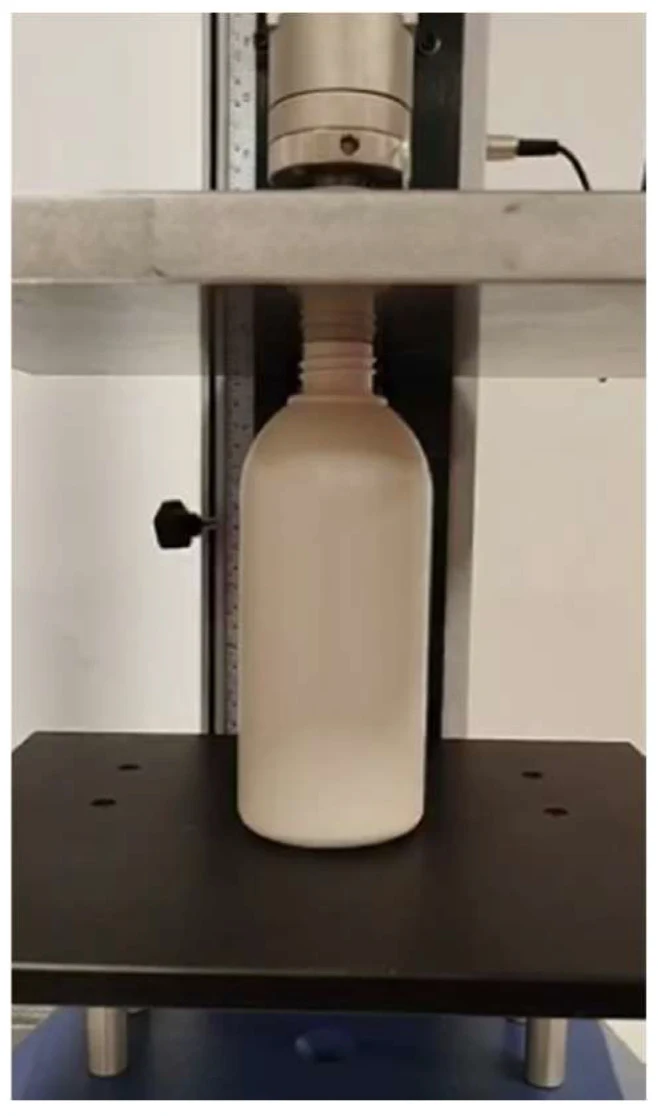
A successful coupon is an early filter. The package itself still needs testing because gates, weld lines, orientation, corners, wall-thickness variation and cooling history affect performance. Evaluate both the target gain and possible losses in stiffness, impact, dimensions, appearance, sealing and process stability.
Step 6: Reassess recyclability and compliance on the final construction
An additive being compatible with PP or PE does not by itself prove that the finished package meets PPWR requirements or a particular RecyClass or CEFLEX guideline. Compatibility depends on the complete packaging construction, concentration, recycling stream and applicable test protocol. Food-contact or other regulated uses require their own documentation and verification.
Where functional additives fit — and where they do not
Functional additives are useful when they solve a defined material limitation inside a controlled formulation. For PP- and PE-based packaging development, several ARGIOPE® / Jindaquan product families may serve as initial screening routes:
On narrow screens, scroll the table horizontally to see all columns.
| Observed limitation | Candidate modification route | Evidence required before adoption |
|---|---|---|
| Brittle fracture or inadequate elongation | Compatible impact-modifier route | Impact or drop data at the relevant temperature, plus retained stiffness and dimensions |
| Cold cracking during logistics or use | Anti-cold or low-temperature toughening route | Conditioned part testing at the actual target temperature |
| Excessive deflection or insufficient rigidity | Stiffening-agent route | Flexural/top-load performance, impact retention, creep and part weight |
| Warpage or dimensional drift | Anti-warping/dimensional-stability route | Measurements across the intended moulding window and after conditioning |
| Incomplete filling or narrow process window | Melt-flow modification route | Pressure, torque, cycle, weld-line strength, dimensions and final mechanical retention |
These are screening directions, not universal prescriptions. An additive cannot make an undefined package recyclable, compensate for uncontrolled raw materials, repair unsuitable part geometry or replace validation by the packaging producer.
The strongest formulation is not the one with the longest additive list. It is the one that achieves the required package performance with a controlled composition, a stable process and the least unnecessary complexity.
The role of additive suppliers is changing
PPWR will push packaging decisions beyond simple resin substitution. Converters will increasingly need evidence connecting composition, manufacturing conditions, package performance and end-of-life compatibility.
That changes what a useful additive supplier should provide. A catalogue and a starting dosage may help open a discussion, but they are not enough to close an engineering decision. Suppliers need to ask about the base resin and grade, wall thickness, process, temperature, failure mode, properties that must be retained and the recycling protocol relevant to the target market.
At Jindaquan, we view additive engineering as a way to reduce the performance compromises created by material simplification. The objective is not to add functions indiscriminately. It is to identify the smallest credible modification route for the selected PP or PE system, then help the customer build a repeatable trial around the actual package.
Conclusion: simplify the structure, not the engineering
Mono-material packaging can improve alignment with established recycling streams, but material simplification transfers more responsibility to the dominant polymer and to the formulation behind it.
The practical challenge is not choosing between recyclability and performance. It is finding a formulation window in which the package remains tough enough, rigid enough and processable enough while its complete construction stays compatible with the intended recycling route.
The most useful starting question is therefore not “Which additive should we add?”
It is:
Which function was lost when the packaging structure was simplified, under what condition does it fail, and which other properties must remain unchanged?
If you are evaluating a PP- or PE-based packaging structure, send us the base resin and grade, package construction, processing method, wall thickness, failure condition, target test and properties that must be retained. ARGIOPE® / Jindaquan can help define a bounded additive-screening plan for your formulation. Final packaging performance, regulatory compliance and recyclability must be verified on the complete customer construction.