
Static electricity is easy to dismiss as a nuisance until a film starts collecting dust, clinging during unwinding or feeding unevenly on packaging equipment. A roll can look acceptable at the extrusion line and still create trouble during storage, printing, lamination or final use. In sensitive applications, uncontrolled charge can also threaten electronic components or raise the risk of electrostatic discharge.
Antistatic additives can reduce these problems, but dosage alone does not determine the result. Resin grade, layer structure, processing, humidity, storage time and the rest of the additive package all matter. Selection should therefore start with the application and a measurable target.
Why static matters in film production
PE and PP are electrical insulators. Friction and separation during extrusion, guiding, winding, slitting, transport and use can leave charge on their surfaces. The charge may be invisible, while its effects appear as dust attraction, poor layer separation, unstable feeding, misalignment or nuisance shocks.
For transparent packaging, protective film and display materials, even light contamination can spoil appearance. In printing and lamination, particles can disturb surface consistency. The problem may arise after initial inspection because charge changes again during winding, transport and converting.
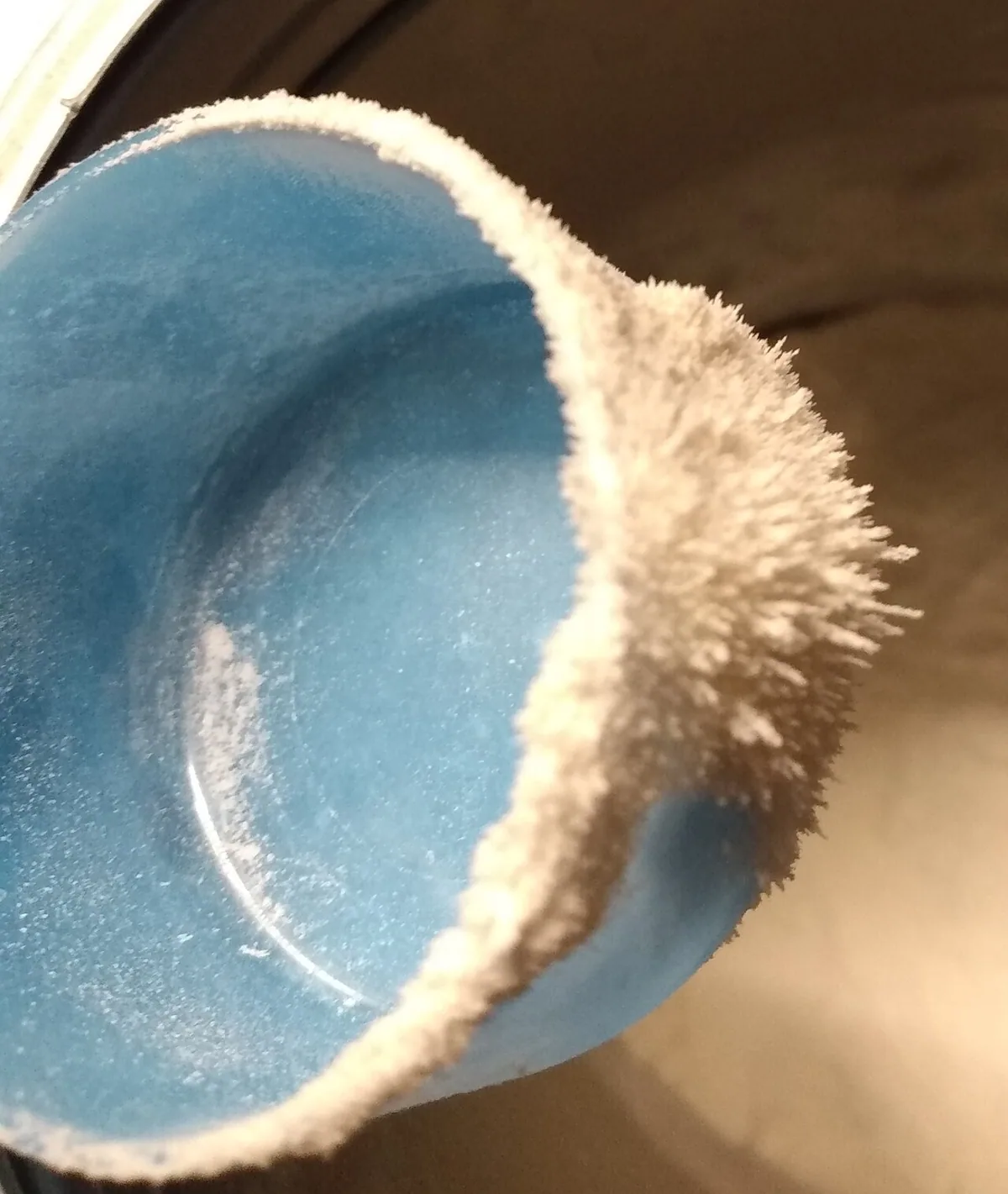
Film cling is not proof of static on its own. Coefficient of friction, winding tension, antiblock performance and surface treatment can produce similar symptoms. A useful diagnosis separates electrostatic attraction from mechanical friction before the formulation is changed.
Winding and converting create changing conditions
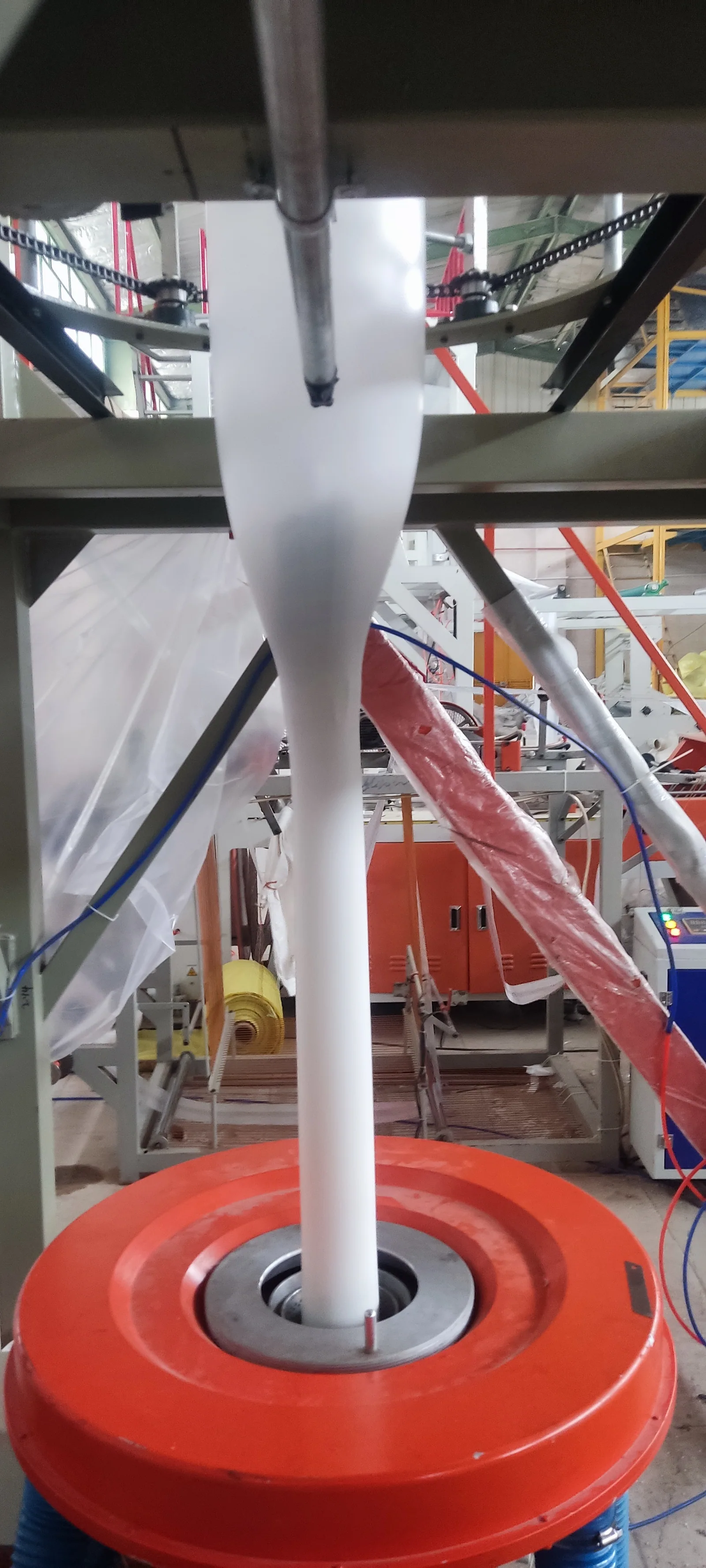
High-speed winding and unwinding repeatedly bring the film into contact with rollers and then separate it. Charge generation can change with line speed, roll diameter, humidity and web tension. A formulation that runs well in one shift may behave differently in a drier room or at another speed.
Static control should therefore be evaluated across the process, not as an isolated laboratory number. Record where the symptom first appears and whether it changes after storage, slitting, printing or lamination.
Why the same dosage can give different results
Polymer and grade affect migration
PE and PP differ in structure, crystallinity and additive migration. An additive that reaches the surface quickly in LDPE may move more slowly in HDPE, LLDPE or PP. Density, molecular-weight distribution, fillers, elastomers and recycled content can alter both migration and final surface behaviour. A dosage established in one resin cannot be transferred to another without testing.
Humidity affects many conventional systems
Many internal antistatic additives migrate towards the surface, where a hydrophilic part helps adsorb moisture and provides a path for charge dissipation. The same film may therefore show lower surface resistance in warm, humid air than in a cool, dry environment. ASTM D257 notes that surface resistance or conductance can change rapidly with humidity. Temperature and relative humidity must be recorded whenever results are compared.
Performance may need conditioning time
A migrating additive may not show its full effect immediately after extrusion. Measurements taken at the line, after 24 hours, after 72 hours and after longer storage can tell different stories. Early performance matters when the film is converted immediately; conditioned performance may matter more when the product is stored before use. Neither result should be presented as universal without its timing.
Thickness, layers and other additives matter
A monolayer film and a multilayer package do not provide the same migration path. Skin-layer composition, core composition, layer ratio and the concentration at the active surface all influence the result. Slip agents, antiblock, pigments, fillers, processing aids and stabilisers can also change dispersion, migration, friction and surface deposits. Increasing only the antistatic dosage may miss the real interaction.
Define the target before choosing the additive
“Reduce static” is too broad for a useful trial. Define whether the objective is to reduce dust attraction, improve layer separation, stabilise winding, improve feeding, reduce nuisance shocks, protect static-sensitive goods, reach a surface-resistance range or shorten charge-decay time.
General packaging and electronics protection do not have the same acceptance criteria. The required duration also matters: a process aid needed during winding is not necessarily the same solution as static control expected after long storage in dry air. Claims such as “long-lasting” or “permanent” need evidence under the intended conditions.
Build a controlled trial matrix
A practical first screen can compare an unmodified control with low, middle and higher addition levels within the recommended range. Use the same resin lot and comparable processing conditions. Record enough information to explain the result:
- Resin producer, grade, virgin or recycled content
- Film thickness and mono- or multilayer structure
- Temperature profile, output, line speed and cooling
- Corona treatment and downstream process
- Other additives and their approximate levels
- Test temperature, relative humidity and conditioning time
Changing several formulation variables at once makes it difficult to know which one caused the effect. The control sample is essential.
Test more than one time and one property
For a migrating system, measure shortly after production and again after defined conditioning intervals. Use the timing that reflects the real production and use sequence. Condition all comparison samples under the same environment before testing.
Surface resistance is useful, but it is not enough on its own. Depending on the application, also review charge-decay time, dust attraction, blocking, layer separation, coefficient of friction, haze, light transmission, surface appearance, print adhesion, lamination, heat-seal strength, odour, bloom and performance after ageing or rubbing. A low resistance value is not a commercial success if the film no longer prints, seals or looks acceptable.
ASTM D257 covers resistance and resistivity measurements for insulating materials. IEC 61340-2-3 describes methods for resistance and resistivity of solid materials used to avoid electrostatic charge accumulation. The suitable method depends on the product, resistance range and intended use.
Protect printing, optics and sealing
PE and PP films often receive corona or plasma treatment before printing, coating or lamination. Because internal additives can migrate to the surface, evaluate surface energy, ink adhesion and coating performance at the actual interval between treatment and printing. Use the customer’s ink, curing conditions and production sequence where possible.
Film handling also depends on friction. If feeding is unstable, review the slip and antiblock system alongside static. For clear packaging and protective film, check haze, clarity, gloss, colour, streaking and deposits. For packaging structures, confirm heat sealing and lamination at the real temperature, pressure, dwell time, adhesive and substrate construction.
Information needed for a focused first selection
A supplier can narrow the first trial when the application is described precisely. Useful inputs include:
- Base polymer and exact resin grade
- Virgin or recycled content
- Film thickness and layer construction
- Extrusion, blow-moulding, injection or compounding route
- The observed static-related failure
- Target resistance or charge-decay time
- Expected humidity, temperature and required duration
- Printing, coating, lamination and sealing requirements
- Regulatory or food-contact requirements
- Existing additives and approximate dosage levels
Not every project needs every detail at the first contact, but uncertainty in the material and process should be reflected in a broader trial rather than hidden behind a fixed dosage.
Connect laboratory results to production
A laboratory result is a starting point. Scale-up should examine dispersion, feeding stability, deposits, output, pressure or torque, web handling and downstream conversion. Final approval belongs to the complete formulation on the actual manufacturing route.
ARGIOPE® can support application-based selection, relevant TDS and SDS documents, starting trial ranges, samples and follow-up based on measured results. Recommendations remain subject to verification in the customer’s resin, equipment and end-use conditions. A-440 is positioned for short-term antistatic requirements, while A-4409 is the longer-lasting route; the correct grade still depends on the polymer, process, climate and duration target.
Small formulation changes can affect the whole process
Static may begin as a surface charge, but its effects can extend through extrusion, winding, storage, printing, packaging and handling. Reliable control requires the resin, film structure, process, humidity, conditioning time and downstream requirements to be considered together.
A structured trial shows not only whether an additive dissipates charge, but whether it does so without sacrificing the other properties the film must retain. Send the base resin, process, layer structure, static-control target and test conditions to define a focused starting plan.